We read about empowered teams, fast feedback loops, and autonomous delivery in the Agile books.
But reality?
You’re running Scrum in a company that still works like it’s 2003.
- Approvals from 3 levels up
- Fixed annual budgeting
- Teams treated like “resources”
- Water-Scrum-Fall everywhere
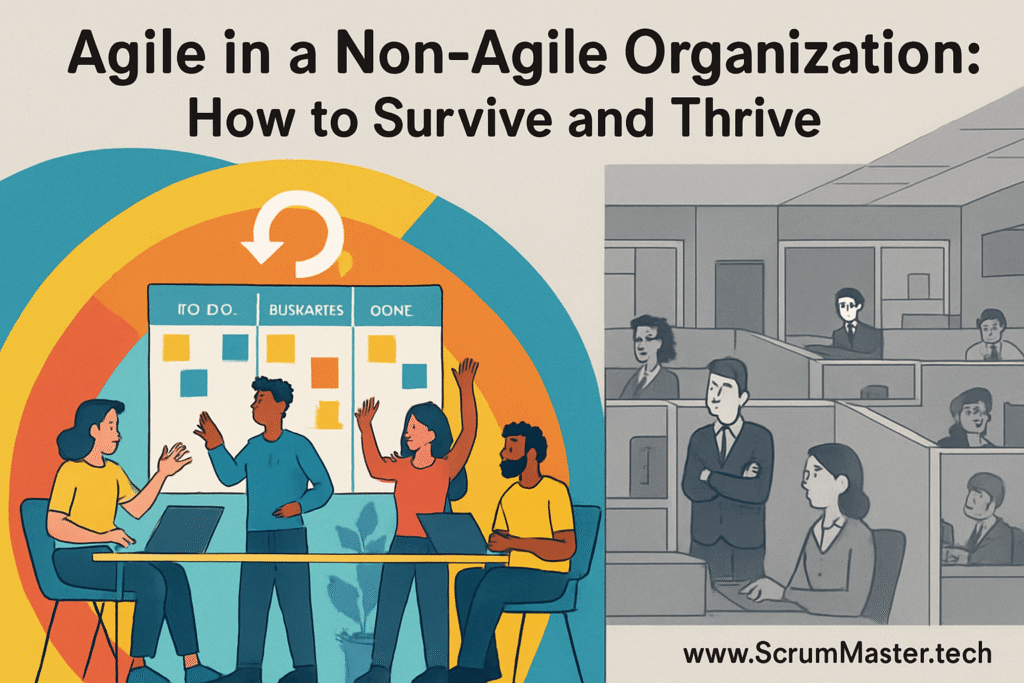
If you’ve ever felt like the only Agile person in the building — you’re not alone.
What You’re Really Dealing With
- It’s not just a “process mismatch”
- It’s a culture clash
You’re trying to introduce adaptability into a system built for predictability and control.
Common Struggles for Scrum Masters in Legacy Environments
- Product Owners with no authority
- “Sprints” that are just waterfall phases in disguise
- QA/testing locked behind release gates
- Managers demanding burndowns and timesheets
- Agile seen as “just standups and Jira tickets”
It’s frustrating — but not impossible.
The Survival Playbook
1. Start Small, Go Deep
Don’t aim to “transform” the org. Aim to create a pocket of real agility in one team.
Focus on principles:
- Feedback over finish
- Learning over planning
- Collaboration over compliance
2. Manage Expectations Transparently
Speak two languages:
- Agile principles to the team
- Outcome-focused updates to leadership (without Agile jargon)
Use terms like:
- “Faster risk validation”
- “Early feedback on business ideas”
- “Reduced time to learning”
3. Coach Laterally, Not Just Down
Your biggest impact may come from influencing:
- POs
- Managers
- Ops/Compliance teams
Invite them into conversations, not ceremonies.
4. Create Visible Wins
Nothing silences skeptics like results:
- Reduced rework
- Faster release to market
- Happier end-users
Make these wins visible and connect them to Agile behaviours.
Personal Reflection from Coach:
I once worked with a team doing great Agile delivery — within a project governance model built for waterfall.
Instead of fighting leadership, I reframed our reviews.
“Here’s how fast we’re testing your assumptions.”
“Here’s what we learned — and how it’s saving money.”
Gradually, we earned the space to be Agile — not just do Agile.
Takeaways
- Agile in a legacy org is more about influence than enforcement
- Culture shifts through trust and proof, not process alone
- You’re not broken. The system needs your persistence and clarity
Final Thought from Coach:
“In a non-agile environment, the Agile mindset is your biggest asset — not your ceremonies.”
Explore more blogs at: