Edit Template

Author name: prashanthdevm

Agile and Scrum Master Training online by ScrumMaster.Tech
Blog

Scrum Mastery at Scale: Influence Without Authority

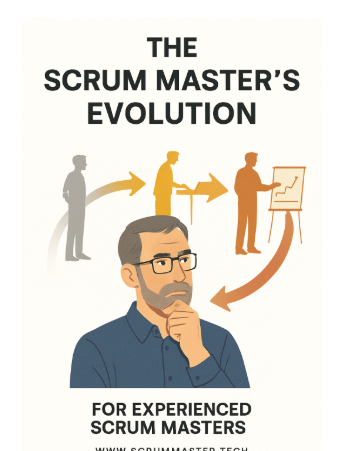
After a few years as a Scrum Master, you stop asking “how to run a retrospective.”You start asking: “How do I influence leadership decisions?” “How do I protect agility in a waterfall culture?” “How do I grow without becoming a project manager?” This is the quiet crisis of experienced Scrum Masters. The Real Role: Guardian of Culture, Not Just Ceremonies When you’re experienced, you realise: Your greatest power is not facilitation. It’s shaping mindsets without direct control. You’re often the only person holding the line between agility and chaos — without any formal authority. And that’s where mastery lies. Advanced Tensions You Face Daily Surface Level Mastery Level “Let’s finish the sprint.” “Should we sprint this at all?” “Stakeholder wants a demo.” “How do I coach them on value delivery?” “Team is quiet in standup.” “What invisible tensions are blocking them?” “Velocity dropped.” “Is the system demotivating the team?” Influence Without Authority: How to Lead When You’re Not the Boss Master the Art of Frictionless Pushback Instead of saying “no”, ask:“What are we optimising for?” Coach the System, Not Just the Team Agility breaks when leadership isn’t aligned. Facilitate enterprise retrospectives. Bring data, not drama. Hold Space for Dissent Experienced teams need safety to challenge each other — and you. Shift Metrics to Meaning Stop reporting velocity. Start sharing impact narratives. A Personal Story: When I Stepped Back to Lead Forward I once coached two teams — same backlog, same tools.One was thriving. The other was dragging. I realised I was too present in the second team.They looked to me for decisions, not each other. So, I stepped back.Uncomfortable? Yes.But in 3 sprints, they became more vocal, creative, and confident. Sometimes, leadership means getting out of the way. Takeaways for the Advanced Scrum Master Your impact is measured in mindset, not meetings.Focus on systems thinking — not just individual sprints.Create ripple effects across teams, departments, and leadership. 👤 Final Thought: “The most powerful Scrum Masters don’t control the room — they change the room.” For More Deep-Dive Content 📘 Read more on ScrumMaster.tech
Agile and Scrum Master Training online by ScrumMaster.Tech
Blog

“Why Many Scrum Masters Fail – And How You Can Avoid It”

Why Many Scrum Masters Fail – And How You Can Avoid It Becoming a Scrum Master is exciting — it’s one of the few roles in tech where your success isn’t tied to code, but to people.Yet, I’ve seen many new (and even experienced) Scrum Masters stumble. Why? Here’s the truth: Most failures in this role don’t come from lack of knowledge — they come from misunderstanding the real purpose of the Scrum Master. Let me break down the most common mistakes I’ve observed and what you can do to avoid them. Mistake #1: Acting Like a Project Manager Many transition into Scrum thinking they need to “manage the team” or “ensure everyone is working.” But in Scrum, the team is self-organizing.Your job isn’t to monitor tasks — it’s to remove blockers, coach Agile values, and facilitate collaboration. Mistake #2: Ignoring the Organization Scrum Masters often focus only on the team. But your influence needs to reach beyond the team. Educate stakeholders about Agile. Align leadership expectations with Scrum values. Challenge anti-patterns like “mini-waterfall Sprints.” You’re not just a team-level coach — you’re a change agent for the organization. Mistake #3: Hiding Behind the Framework Yes, Scrum has Events, Roles, and Artifacts. But following the process alone doesn’t bring agility. You must understand why the events exist, and help the team evolve how they use them. Be courageous enough to adapt the framework without diluting its essence. Mistake #4: Avoiding Conflict Scrum surfaces issues — it’s supposed to. But many Scrum Masters avoid uncomfortable conversations. True servant leadership means helping the team navigate tension.Let problems surface. Facilitate healthy dialogue. Don’t sweep dysfunction under the rug. Growth often looks like friction before it becomes flow. What Successful Scrum Masters Do Differently From my years of guiding Scrum teams and mentoring aspiring Scrum Masters, I’ve noticed a few powerful habits: They ask powerful questions instead of giving answers. They coach individuals without preaching. They make the invisible visible — blockers, dysfunction, assumptions. They balance empathy with assertiveness. Most importantly, they never stop learning. Final Thought If you’re stepping into the Scrum Master role or preparing to… you’re not alone.I’ve seen people from QA, BA, Dev, and even HR backgrounds grow into great Scrum Masters — with the right mindset and guidance. Want to talk about your Scrum journey? Reach out — sometimes a single conversation can change your direction. —Agile Enthusiast | Scrum Guide | Quietly Coaching the Next Generation  

Agile and Scrum Master Training online by ScrumMaster.Tech
Blog

Beyond Sprints: The Soul of Agile in a Complex World

Have you ever followed Agile perfectly and still felt something was off? That’s where most experienced Agile professionals reach a crossroads — where frameworks stop being checklists and start becoming conversations. When I first led a team that “did everything right” — daily standups, sprint planning, retros — we still delivered late, morale was low, and stakeholders were unhappy. So, what was missing? It wasn’t the process.It was the purpose behind the process. The Soul of Agile: It’s Not Just Speed Agile isn’t about going faster.It’s about going smarter, together. In complex environments — distributed teams, shifting business priorities, or high-pressure product cycles — prescriptive agility breaks. What works is: Co-creation over control Adaptability over velocity Trust over task management Advanced Insight: The Three Levels of Agility Operational Agility:Doing Scrum ceremonies.Task breakdownVelocity tracking Team Agility:Working as a real team.Psychological safetyShared ownership Strategic Agility:Navigating uncertainty like a pro.Embracing ambiguityPivoting with purpose Most teams operate at Level 1. High-performing teams evolve to Level 3. A Retrospective that Changed My Mindset In one project, a senior developer said:“I feel like we’re running a race with no finish line. What’s the point?” That moment forced me to bring humanity back into our retrospective.We didn’t discuss what went wrong technically.We discussed how it felt to build the wrong thing for the right reasons. And that changed how we planned the next sprint — not with more user stories, but with more empathy. Actionable Takeaways Run retros that ask: “What did we ignore?” Plan sprints with real end-user stories, not just tickets. Teach stakeholders agility — don’t just demo work, share why pivots happen. Celebrate progress, not perfection. Final Thought from MPD: “The future belongs to Agile teams who can not just build fast, but think deeply.” Want more like this? Explore other blogs on ScrumMaster.tech

Scrum Master Training online by ScrumMaster.Tech
Blog

The Daily Scrum Isn’t a Status Meeting. Here’s What It Really Is

Introduction I’ve lost count of how many “Daily Standups” I’ve sat through that felt… lifeless. People reciting what they did. Saying what they’ll do. Silently avoiding eye contact.The whole thing over in 6 minutes—and no one actually more aligned than before. Here’s the truth: if your Daily Scrum feels like a checklist item or a report to the Scrum Master, it’s broken. Let’s clear this up:The Daily Scrum is not a status meeting.It’s a chance for the team to inspect progress toward the Sprint Goal—and adapt their plan if needed. Let’s unpack what that really means. This is the biggest misconception I see. The Daily Scrum isn’t a time to update me as the Scrum Master. I’m not your boss, manager, or judge. The meeting is for the team, to self-organize and plan the next 24 hours. I’m just there to observe, remove blockers if needed, and help if asked. Too often, people list random tasks they’re working on, disconnected from any bigger context. But the point of the Daily Scrum is to inspect progress toward the Sprint Goal. So the question should be: Without that context, it’s just noise. Think of it like this:The team wakes up, gathers around, and says, “Okay—given what happened yesterday, how do we move forward today?” It’s collaborative, dynamic, and intentional. Not scripted. Not robotic. Not just three questions. If I’m running your Daily Scrums every day as a Scrum Master, that’s a red flag. Over time, the developers should own it. They know the work. They know the blockers. My role is to support—not steer. Encourage shared ownership. Rotate who starts. Ditch the “round-robin” format if it’s stale. Forget charts, dashboards, or overly polished Jira boards. Ask: What’s stuck? What’s surprising? What do we need to swarm on today? That’s the real conversation. Not just “I did this / I’ll do that.” Bonus: A Powerful Opening Prompt Try starting your next Daily Scrum with this: “How confident are we in achieving the Sprint Goal, and what do we need to adjust today?” Watch how quickly the discussion shifts from status to strategy. Final Thoughts The Daily Scrum isn’t just a ritual—it’s a lever.Done right, it sharpens focus, boosts alignment, and prevents last-minute surprises. As a Scrum Master, your job isn’t to control it. It’s to protect it—and help your team rediscover its true value. Trust the team. Elevate the conversation. Align with the goal.

Scrum Master Training online by ScrumMaster.Tech
Empowering Agile Teams. Transforming Deliveries. Learn Scrum from real-world experience, not just theory.

coach@scrummaster.tech

© 2025 ScrumMaster. All Rights Reserved.

Scroll to Top